 Flamico
Relapsed after quitting porn? Read this before you give up
You slipped. Maybe after three days, maybe after three months. Right now you might feel disgust, anger, or a heavy “what’s the point”. Before you decide anything, read this. A slip is an event, not an identity. It doesn’t erase what you built, and it doesn’t predict how this ends. What you do in the next 24 hours matters far more than what just happened.
First: this doesn’t erase your progress
Your mind is probably telling you that you’re back at day zero, that the streak was fake, that you’ll never change. That’s the slip talking, not the facts.
Here’s what the research on habits actually says. In a well-known study that followed people building a new daily habit, the authors found that missing one opportunity did not materially affect the habit-forming process.1 One miss didn’t undo the work. The people who succeeded weren’t the ones who never missed. They were the ones who kept going after they did.
So take stock of what’s still yours:
- Every urge you rode out before this one.
- Everything you’ve learned about your triggers and hard hours.
- The blocks, routines and plans you set up.
- Your longest streak. It happened. It still counts.
A counter resets. You don’t.
The next hour: stop one slip from becoming ten
The most dangerous moment isn’t the slip itself. It’s the hour after it, when a quiet voice says, “The streak is gone anyway, so it doesn’t matter anymore.” That one thought turns a single slip into a whole night, then a whole week.
Addiction researchers have a name for this: the abstinence violation effect. When people explain a slip with something permanent and global, like “I have no willpower” or “I’m just broken”, a single lapse is much more likely to turn into a full relapse. When they see it as a specific mistake, with a specific cause they can fix, they’re much more likely to get back on track.2 The story you tell yourself in this hour matters more than the slip.
So, right now:
- Close everything and put the phone away. If you can, lock it for an hour.
- Leave the room. Drink a glass of water, take a shower, step outside for a few minutes.
- Say it plainly: “I slipped. I’m starting again now.” Not tomorrow. Not Monday. Now.
Guilt can help you. Shame will pull you back.
You probably feel bad right now, and some of that is healthy. But there are two very different kinds of feeling bad, and they lead in opposite directions.
- Guilt says: “I did something I don’t want to repeat.” It’s about the action.
- Shame says: “I am disgusting. I am the problem.” It’s about you.
Psychology research has found that guilt tends to push people toward repairing things and doing better, while shame tends to push them toward hiding, avoiding and giving up.3 And because porn is often how people numb bad feelings, shame can lead straight back to it.
The alternative isn’t letting yourself off the hook. It’s treating yourself the way you’d treat a friend who slipped: honestly, firmly, and with some kindness. That might sound soft, but it works. In a series of experiments, people who responded to their own failures with self-compassion were more motivated to improve, not less: they studied longer after failing a test and were more determined to avoid repeating a mistake.4
If your faith or values are part of why you’re quitting, that’s a strength. Research shows that when people feel their porn use clashes with their values, the distress they feel can be intense, regardless of how much they actually watch.5 Hold on to your values. Just don’t turn them into a weapon against yourself. Keep the standard, drop the self-hatred.
Today: find out what really happened
Every slip has a story, and the story almost always starts earlier than the moment you opened a porn site. Later today, once you’re calmer, write down a few short answers:
- When and where did it happen?
- How were you feeling before it started? Tired, stressed, lonely, bored, rejected, celebrating?
- What was the first step? Usually it isn’t searching for porn. It’s something earlier and smaller: scrolling in bed, “just checking” an app, staying up late with nothing to do.
- Where was the gap? A device without a block, a passcode you knew, a night with no plan, a feeling you didn’t deal with.
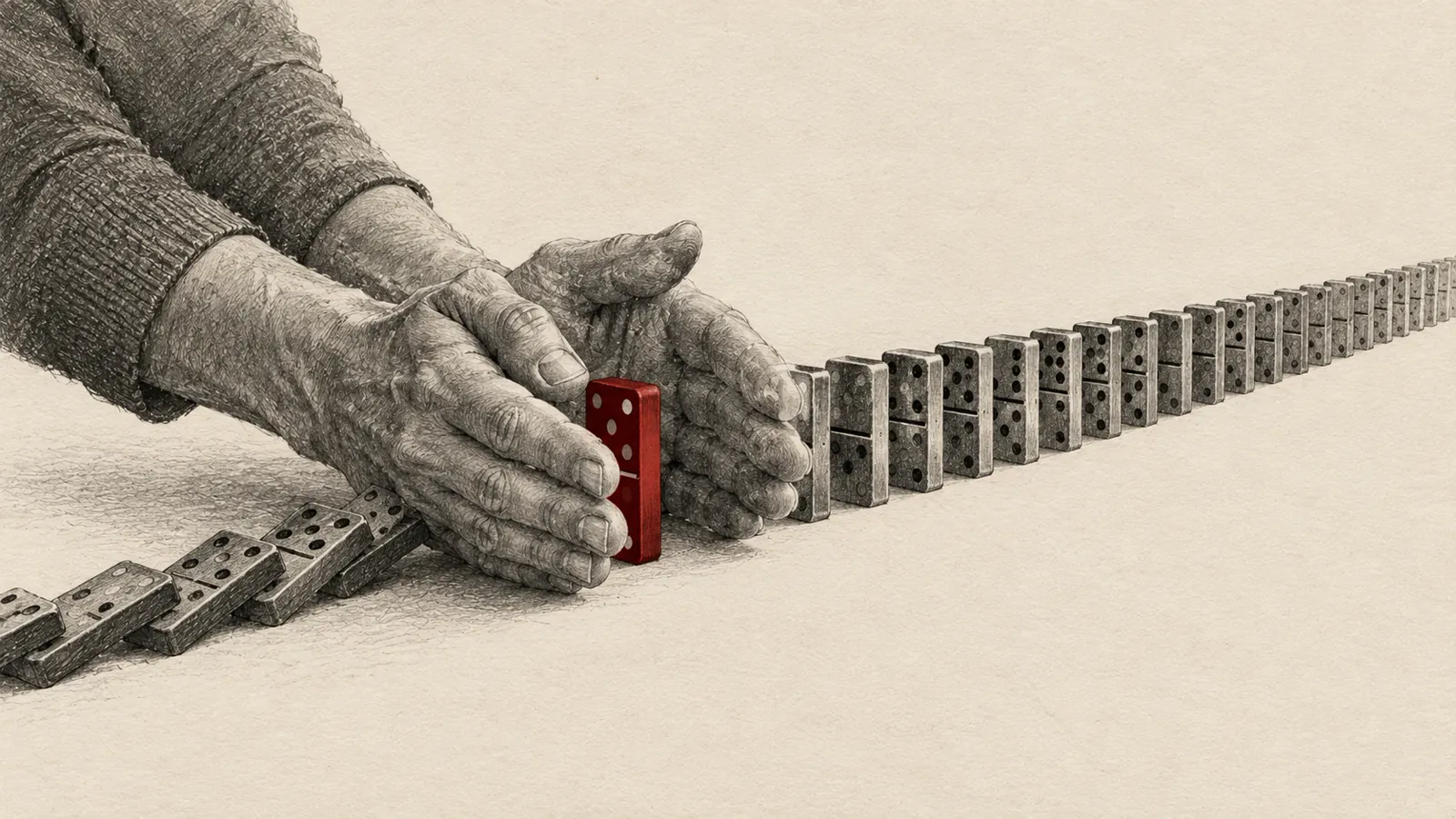
Think of it like a row of dominoes. The last one to fall was the slip, but you can only stop the row by catching one of the first few. Your job today is to find the first domino.
Fix one thing, today
Don’t try to rebuild your whole life tonight. That just leads to an exhausting plan you’ll drop in a week. Close the one gap that let this happen:
- It happened on an unprotected device: block it today. Here’s how on iPhone and Android.
- You switched your block off: make that harder. Give the passcode to someone you trust, or turn on a strict mode that locks your phone when you try.
- It happened late at night: charge your phone outside the bedroom tonight, and set a night lock for your hardest hours.
- It started in a specific app: set a daily limit, or delete the app for a while.
- It started with a feeling: pick one better answer for that feeling, like a walk when you’re stressed or a call when you’re lonely, and decide when you’ll use it.
Tell someone
Secrecy is fuel for the habit. The longer a slip stays hidden, the heavier it gets. If you have an accountability partner, tell them today. You don’t need to give details. “I slipped last night. I’m back on track today” is enough.
If you don’t have anyone yet, consider choosing one trusted person this week. Or talk it through with Mico in Flamico, who will listen without judging and help you plan your next step. Saying it out loud takes away a surprising amount of its power.
The next seven days: rebuild momentum
- Expect the next urge at the same time and in the same place as the slip, and have your plan ready. Our 10-minute plan for urges walks you through it.
- Re-read your reason every day, or watch the video you recorded for yourself.
- Move your body and protect your sleep. Tired and restless is when urges hit hardest.
- Count the small wins: each urge you ride out this week is proof the slip didn’t define you.
- Don’t try to “make up for it” with a punishing plan. Just do today well. Then tomorrow.
A lapse or a relapse? Why the difference matters
Recovery researchers often separate a lapse, a single slip, from a relapse, a return to the old pattern.2 A lapse is an event. A relapse is what happens when a lapse is followed by “I’ve already failed, so why stop?”
That means you’re standing at a fork right now. One slip doesn’t have to become a pattern. The first hour, the honest look at what happened, and the one fix you make today are exactly what keeps a lapse a lapse.
And if you notice a pattern, slips after long streaks, slips during stressful weeks, slips when you’re away from home, that isn’t a reason to give up. It’s a map of where you need more protection.
When to get extra help
If you slip again and again despite real effort, if porn feels out of your control, or if it comes with low mood, anxiety or trauma, please talk to a professional. The World Health Organization recognizes compulsive sexual behaviour disorder, a long-lasting pattern of being unable to control intense sexual urges despite real harm to your life.6 It’s treatable. In one small randomized trial, men who took 12 sessions of acceptance and commitment therapy cut their porn viewing by 93%, compared with 21% in the group that waited.7
Getting help isn’t a sign you failed. It’s using every tool you have. And if you ever feel hopeless or think about hurting yourself, contact a crisis line right away: in the US, call or text 988, or find a free local line at findahelpline.com.
How Flamico helps after a slip
We built Flamico knowing that slips happen, because a quitting app that only celebrates streaks quietly teaches you to hide your bad days.
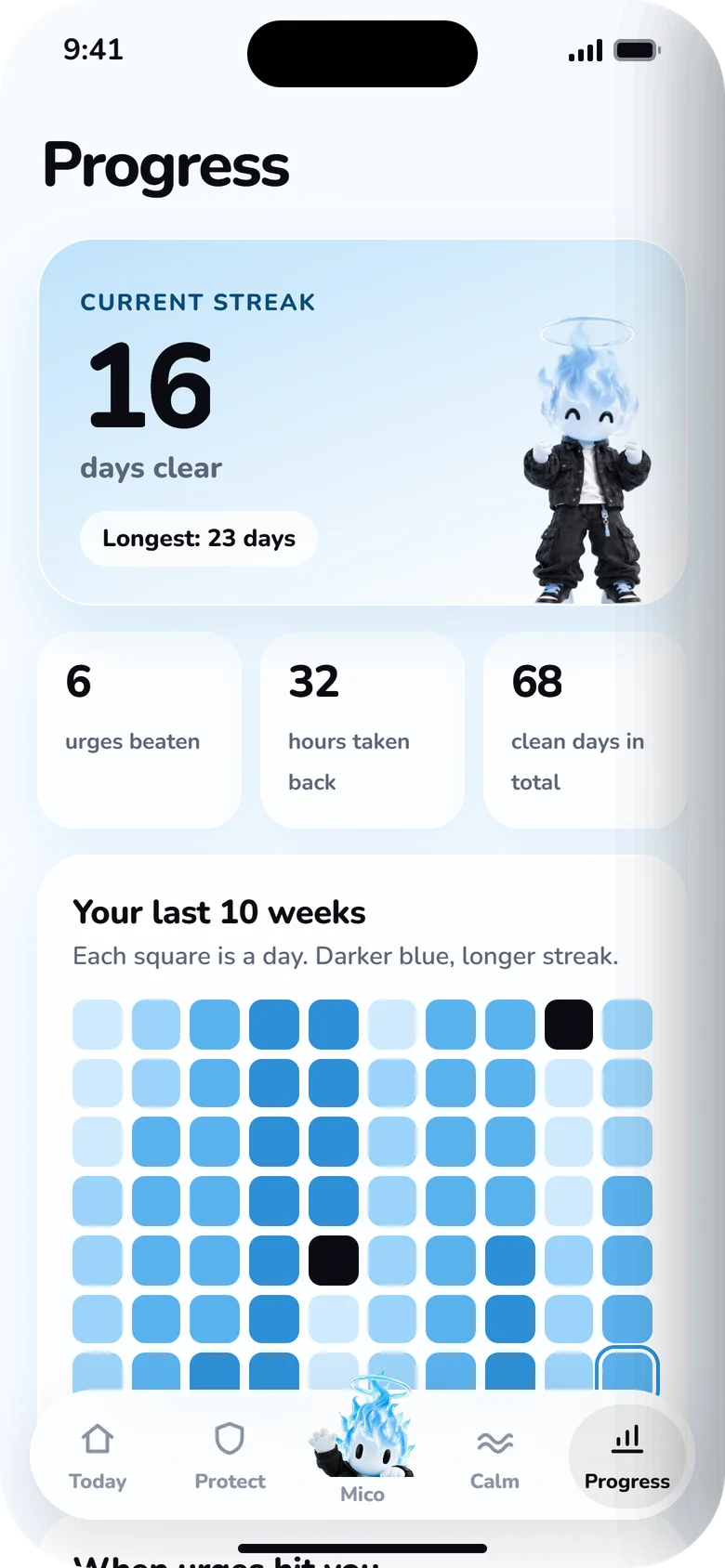
- No-shame slips: log a slip in a few taps and note what triggered it. Your current streak resets. Your longest streak never does.
- Patterns you can see: the Progress screen shows the hours your urges usually hit, so you know exactly where to add protection.
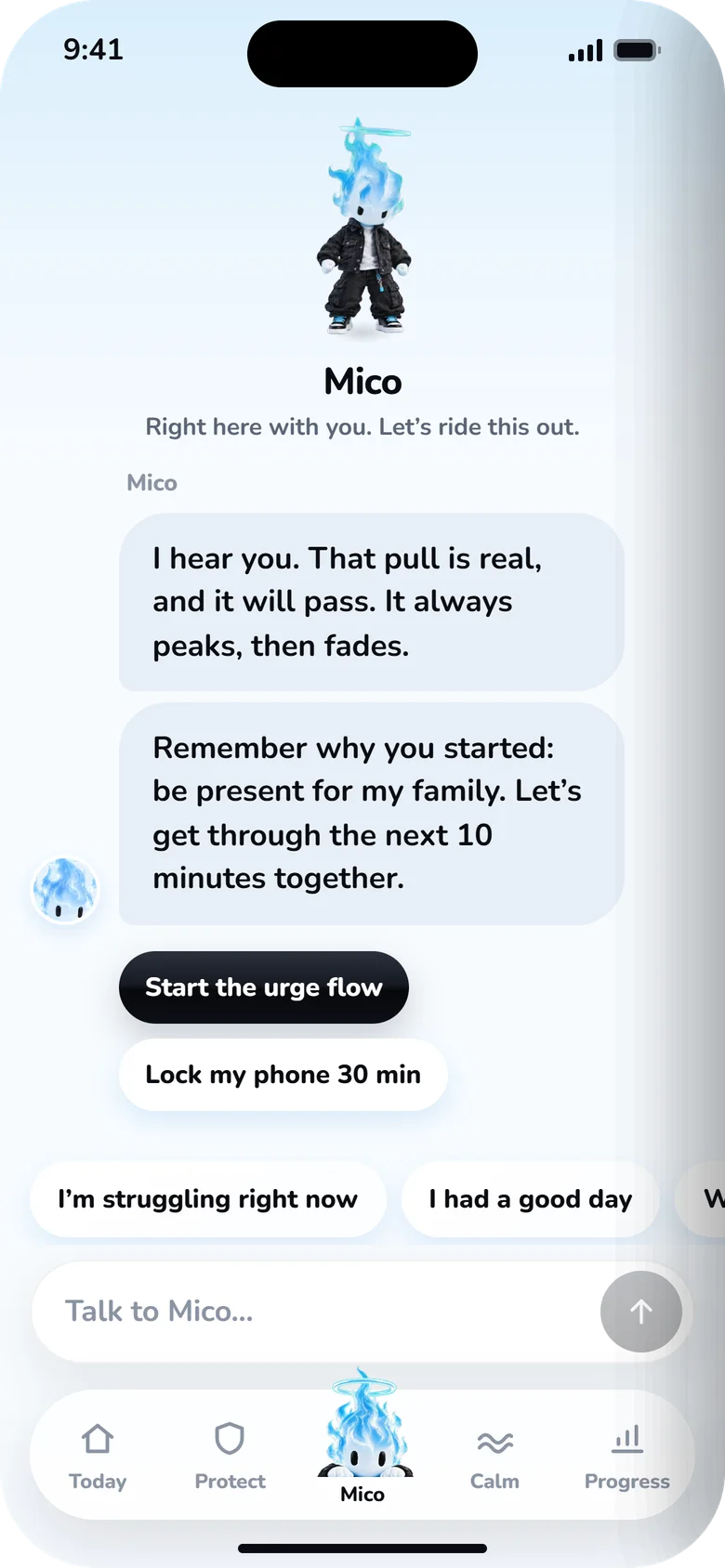
- Mico, the morning after: no lectures, just a friend who helps you work out what happened and what to change.
- Protection that’s hard to undo: strict mode, a one-tap phone lock and a night lock for your hardest hours.
You haven’t lost. You’ve found a gap. Close it, and start again today. For the full plan, read how to quit porn and get your life back.
Questions people ask
Does a relapse reset my progress to zero?
It resets a counter, not what you built. The urges you beat, the habits you changed and what you learned about your triggers are all still there. In habit research, missing a single day didn’t derail people who were building a new habit. One slip is a setback, not a restart from nothing.
Is relapse a normal part of quitting porn?
For many people, yes. Slips are common in any big change of habit, from quitting smoking to changing how you eat. That doesn’t make them harmless, but it does mean a slip says very little about whether you’ll succeed. What you do in the hours after it says much more.
Why do I relapse after a long streak?
Long streaks can bring a quiet complacency: protections get loosened, old triggers come back during a stressful period, or a “just checking” moment turns into more. Treat the slip as information about what to strengthen, not as proof the streak was fake.
Should I restart my day counter after a relapse?
Yes, reset the counter, but keep the bigger picture. Your longest streak still counts, and so does the overall trend: fewer slips, shorter episodes, faster recovery. Flamico resets your current streak after a slip but never your longest one, for exactly this reason.
Should I tell my accountability partner?
Yes, if you have one. Telling someone breaks the secrecy that keeps the habit alive and turns the slip into a conversation instead of a spiral. You don’t need to give details. “I slipped last night, I’m back on track today” is enough.
How many relapses are too many?
There’s no magic number. What matters is the direction: are slips getting further apart and shorter? If they’re getting more frequent despite real effort, or porn use feels out of your control, that’s a good moment to talk to a therapist experienced with compulsive sexual behavior.
Sources
- Lally P., van Jaarsveld C. H. M., Potts H. W. W., Wardle J. (2010). How are habits formed: Modelling habit formation in the real world. European Journal of Social Psychology, 40(6), 998–1009. doi.org/10.1002/ejsp.674
- Hendershot C. S., Witkiewitz K., George W. H., Marlatt G. A. (2011). Relapse prevention for addictive behaviors. Substance Abuse Treatment, Prevention, and Policy, 6, 17. doi.org/10.1186/1747-597X-6-17
- Tangney J. P., Stuewig J., Mashek D. J. (2007). Moral emotions and moral behavior. Annual Review of Psychology, 58, 345–372. doi.org/10.1146/annurev.psych.56.091103.070145
- Breines J. G., Chen S. (2012). Self-compassion increases self-improvement motivation. Personality and Social Psychology Bulletin, 38(9), 1133–1143. doi.org/10.1177/0146167212445599
- Grubbs J. B., Perry S. L. (2019). Moral incongruence and pornography use: A critical review and integration. The Journal of Sex Research, 56(1), 29–37. doi.org/10.1080/00224499.2018.1427204
- World Health Organization. ICD-11 for Mortality and Morbidity Statistics, 6C72 Compulsive sexual behaviour disorder. icd.who.int/browse/2024-01/mms/en#1630268048
- Crosby J. M., Twohig M. P. (2016). Acceptance and commitment therapy for problematic internet pornography use: A randomized trial. Behavior Therapy, 47(3), 355–366. doi.org/10.1016/j.beth.2016.02.001
Start again today, with a better plan.
Flamico blocks porn on your phone, locks it in one tap when an urge hits, and Mico stays with you until it passes.